
Last updated on October 7, 2024
Writing a compelling book description is one of the most crucial steps in marketing your book.
In fact, 65% of book buyers admit that a compelling book description is the most important factor in their purchasing decision.
Whether you’re a seasoned author or an indie writer publishing your first novel, your book description is the gateway to grabbing readers’ attention.
It’s your chance to introduce potential readers to your story and, more importantly, convince them to purchase it.
A great book description is more than a simple summary—it’s a strategic blend of art and marketing, carefully crafted to evoke emotion, intrigue, and action.
In this comprehensive guide, we’ll show you how to write a book description that grips readers and sells your book, while also enhancing your book’s discoverability through the right SEO techniques.
Why a Gripping Book Description is Essential for Success
A book description is more than just a summary—it’s your book’s first opportunity to captivate potential readers and entice them to dive into your story.
In a competitive marketplace where attention spans are short, a gripping book description can make all the difference between a reader purchasing your book or moving on to the next one.
Whether you’re an indie author or a seasoned writer, crafting a compelling, keyword-optimized book description is essential for ensuring your book’s success in both visibility and sales.
The Role of a Book Description in Book Marketing
Your book description is a marketing tool.
It serves as the bridge between your beautifully crafted book cover and a reader’s decision to purchase.
Think of it as the “pitch” for your story, designed to build curiosity and spark a sense of urgency in your readers.
If written effectively, your book description can be the key to turning browsers into buyers.
But what is a book description, exactly?
It’s not just a blurb.
It’s a concise, compelling summary that provides readers with a glimpse into the book’s plot, characters, or themes without revealing too much.
More than that, it serves as part of your book’s metadata, which helps increase your book’s visibility online.
This metadata, when optimized with relevant keywords, ensures your book appears in the right search results, especially on platforms like Amazon.
The Impact of Metadata and Keywords on Sales
Metadata includes key information about your book, such as the title, author name, categories, and of course, your book description.
In today’s digital marketplace, the inclusion of SEO-driven keywords within your book description can significantly impact your book’s visibility.
Properly optimized metadata can ensure that your book ranks higher in search results on major platforms like Amazon, increasing its chances of being discovered by readers.
How to Write a Compelling Fiction Book Description
Writing a compelling fiction book description is an art that requires balancing intrigue with clarity.
This brief yet powerful snapshot of your story should not only capture the essence of your plot but also evoke emotion, setting the stage for the reader’s journey.
The right combination of character insight, conflict, and mystery will hook your audience from the start, leaving them eager to discover more.
In this section, we’ll explore key strategies to create a fiction book description that captivates readers and drives them to hit that “buy” button.
Hook Your Reader with a Powerful Opening Line
The opening line of your fiction book description is the most important part.
This is your chance to grab the reader’s attention immediately and set the tone for what’s to come.
The first sentence should build intrigue or stir emotion, making the reader want to know more.
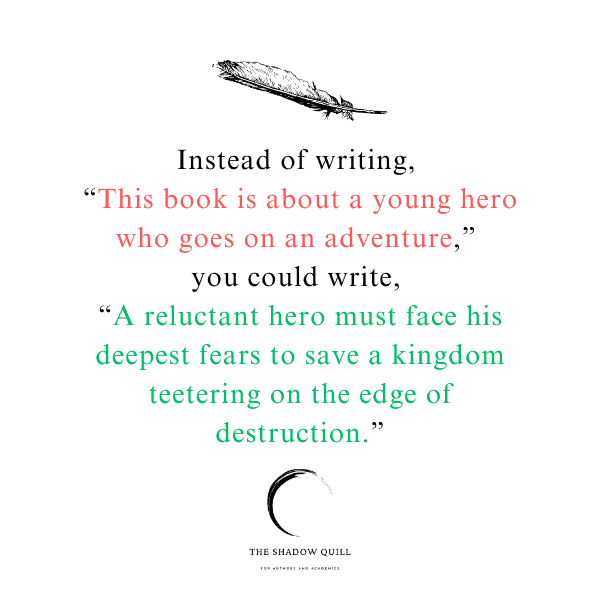
For example, instead of writing, “This book is about a young hero who goes on an adventure,” you could write, “A reluctant hero must face his deepest fears to save a kingdom teetering on the edge of destruction.”
The goal is to make the opening compelling enough that the reader is hooked from the very start.
Focus on Characters and Conflict
After your opening hook, it’s essential to focus on the main characters and the central conflict of your story.
Readers want to know who they will be rooting for and what’s at stake.
Clearly define the protagonist and their primary struggle, and don’t shy away from using emotionally charged language to create empathy.
For example, “Evelyn’s life is turned upside down when a secret from her past threatens to destroy everything she loves. Can she outrun the shadows before they consume her?”
This sentence not only introduces the character but also establishes the stakes and builds intrigue, which keeps the reader invested.
The Importance of Tone and Genre
Your fiction book description must align with your book’s genre.
For instance, a thriller should build suspense and tension, while a romance should focus on emotional depth and relationships.
Make sure the tone reflects the type of story you’re telling.
Readers looking for a cozy mystery expect a different kind of description than those searching for an epic fantasy.
Knowing your audience will help you craft a description that resonates with the right readers.
Whether it’s dramatic and fast-paced or reflective and character-driven, the tone of your book description should mirror the feel of your novel.
Use a Cliffhanger or Call to Action to Close
End your description with a hook or call to action that leaves the reader wanting more.
In fiction, this can be a cliffhanger that teases the central mystery or conflict, urging the reader to buy the book to find out what happens next.
For example, “As Evelyn uncovers the truth, she must decide: will she confront her past, or let it consume her? The fate of her future—and her heart—hangs in the balance.”
This creates a sense of urgency and leaves the reader eager to continue the story.
How to Write an Engaging Non-Fiction Book Description
Writing an engaging non-fiction book description requires more than just summarizing the content—it’s about demonstrating the value your book offers to readers.
Whether you’re providing expert advice, sharing personal insights, or teaching new skills, your description should clearly communicate why your book is worth their time.
In this section, we’ll explore how to craft a non-fiction book description that establishes credibility, highlights key takeaways, and convinces readers that your book will provide the answers or knowledge they’re seeking.
Establish Your Authority from the Start
For non-fiction, the author’s credibility is crucial.
The opening lines of your non-fiction book description should establish your authority on the subject matter.
Readers need to trust that you are the right person to guide them through the topic, whether it’s self-help, business advice, or a memoir.
For example, “With over 20 years of experience in leadership development, John Doe provides actionable strategies to transform your workplace and elevate your career.”
This immediately positions the author as an expert and gives readers confidence in the book’s value.
Highlight the Value and Benefits to the Reader
Non-fiction readers are looking for practical solutions or insights.
Instead of focusing on the author or the book’s structure, emphasize the benefits the reader will gain.
What problem does your book solve?
What knowledge will the reader walk away with?
For example, “In this step-by-step guide, you’ll learn proven techniques to boost productivity, reduce stress, and take control of your daily habits.”
This clearly outlines the value the book offers and why the reader should care.
Break Up Complex Information with Bullet Points
For non-fiction books, using bullet points can help break up large blocks of text and make the description more digestible.
Readers are more likely to scan non-fiction descriptions, so lists of takeaways or benefits can help them quickly understand the book’s value.
Example:
- Learn how to implement habits that stick.
- Discover tools to increase your focus and productivity.
- Unlock the secrets to a balanced, fulfilling life.
End with a Strong Call to Action
Just like in fiction, your non-fiction book description should end with a call to action.
Encourage readers to take the next step and purchase the book by emphasizing the impact it will have on their lives.
For example, “Start transforming your habits today and take the first step toward lasting success. Get your copy now!”
Best Book Description Tips for Indie Authors
For indie authors, a well-crafted book description can be the difference between standing out in a crowded marketplace and getting lost in the shuffle.
With no big publishing house to handle your marketing, it’s essential to master the art of writing a book description that captures attention and converts readers into buyers.
In this section, we’ll provide you with the best tips for crafting a compelling, SEO-optimized book description tailored specifically for indie authors—helping you boost your visibility and maximize your book’s potential.
How Indie Authors Can Stand Out with a Unique Voice
As an indie author, your voice is one of your most powerful tools.
A well-crafted book description can highlight your unique style and tone, setting you apart from the competition.
Readers are drawn to authenticity, so let your personality shine through in your description.
The Power of Keywords and SEO for Self-Published Authors
Indie authors often rely heavily on online platforms like Amazon for sales.
By researching relevant keywords and incorporating them naturally into your description, you’ll increase your chances of showing up in readers’ search results.
Avoid Common Mistakes in Indie Book Descriptions
Many indie authors fall into the trap of either overloading their description with too many details or making it too vague.
Your goal should be to strike a balance between providing enough information to hook the reader and leaving some mystery.
Avoid complex language and unnecessary details that might confuse or overwhelm the reader.
How to Write a Book Blurb That Sells
A book blurb is a powerful marketing tool that can make a lasting impression on potential readers.
Unlike a full book description, a blurb is a concise, engaging snapshot of your book that is designed to hook readers and entice them to buy.
Whether it’s displayed on the back cover or used in promotional materials, a well-written book blurb can be the deciding factor in a reader’s purchasing decision.
In this section, we’ll explore key strategies for writing a book blurb that not only captures attention but also drives sales.
The Difference Between a Book Description and a Book Blurb
A book blurb is often used for marketing purposes, while a book description provides more detailed information.
Your blurb should be a condensed version of your description, perfect for ads, email campaigns, or social media.
Crafting a Short, Impactful Blurb for Marketing
Your book blurb needs to be short but packed with intrigue.
Focus on the core conflict or value proposition and cut any extraneous details.
A well-written blurb can be the deciding factor in whether someone clicks on your ad or scrolls past it.
The Do’s and Don’ts of Writing a Bestselling Book Description
Crafting a bestselling book description requires more than just summarizing your plot or content—it’s about presenting your book in a way that captivates readers and compels them to buy.
There are specific techniques that can elevate your book description, as well as common pitfalls that could turn potential readers away.
In this section, we’ll walk you through the essential do’s and don’ts of writing a book description that grabs attention, engages your audience, and boosts your chances of success in the competitive book market.
Do Use Active Language and Emotional Triggers
Active language and emotionally charged words can make your book description more engaging.
Use verbs that inspire action, and focus on emotions that will resonate with your readers, such as excitement, fear, or curiosity.
Don’t Overload Your Description with Too Much Detail
It’s tempting to include every plot point or lesson in your description, but this can overwhelm potential readers.
Keep it concise and focus on the most compelling aspects of your book.
Do Include Genre-Specific Keywords
Incorporating the right keywords into your description is crucial for SEO.
Whether you’re writing a fiction book description or non-fiction book description, using targeted keywords will help your book rank higher in search results and attract the right audience.
Let The Shadow Quill Help You Write a Book Description That Sells
Crafting the perfect book description is both an art and a science, requiring a deep understanding of your story, your readers, and the market.
At The Shadow Quill, we specialize in helping authors write book descriptions that not only grab readers’ attention but also boost book sales.
Our professional editors can guide you through the process, ensuring that your book description is SEO-optimized, emotionally compelling, and designed to convert readers into buyers.
Don’t leave your book’s success to chance—contact The Shadow Quill today and let us help you create a book description that sells!
Leave a Reply